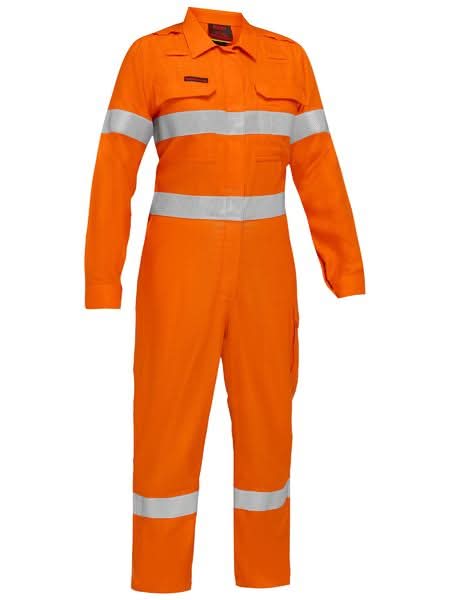
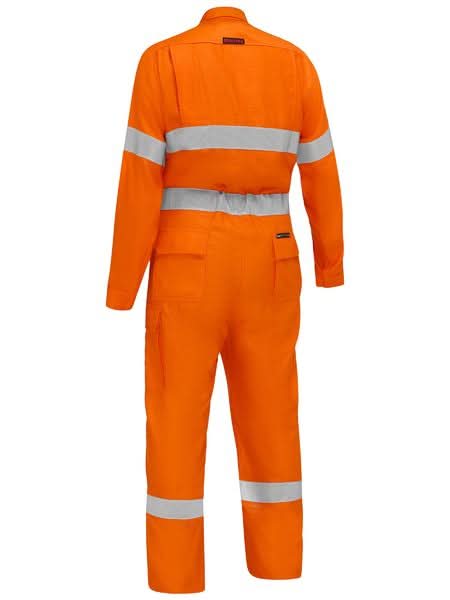
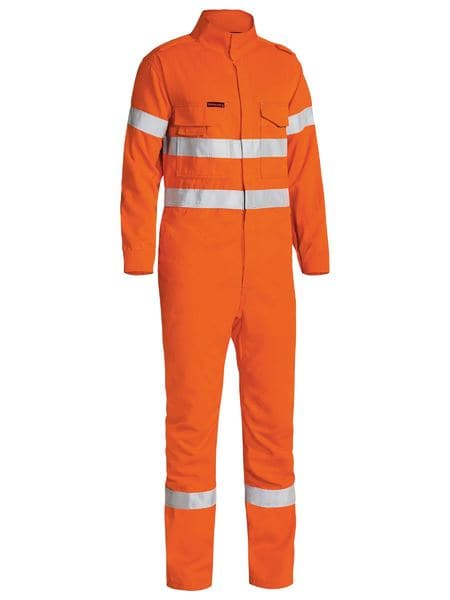
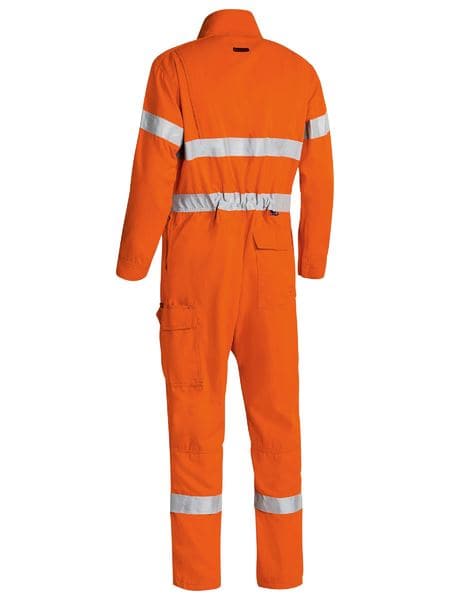
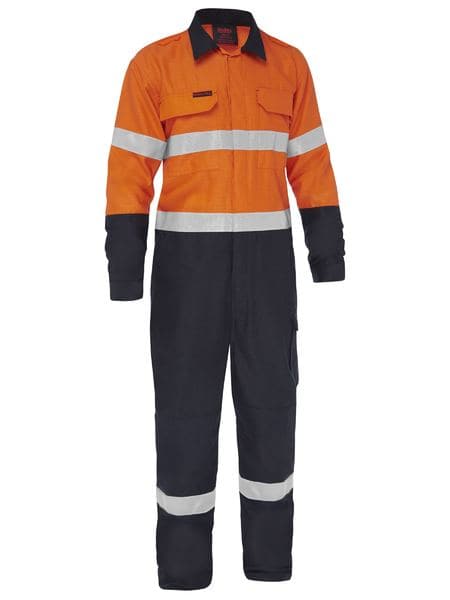
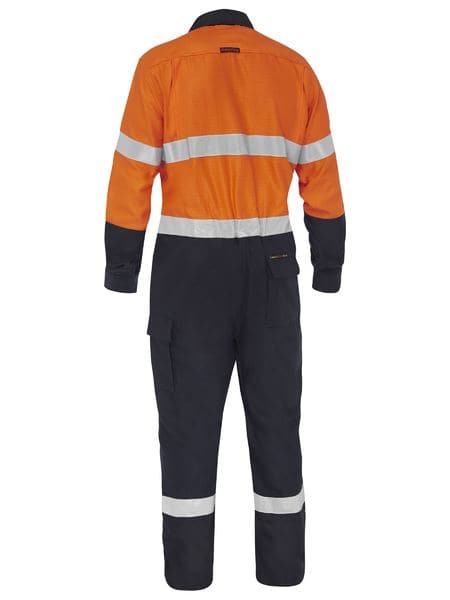
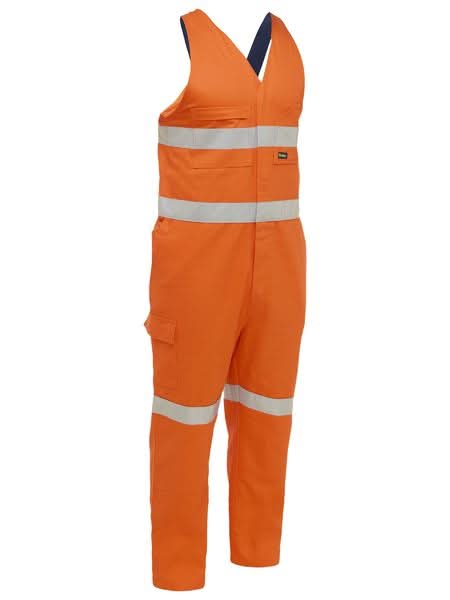
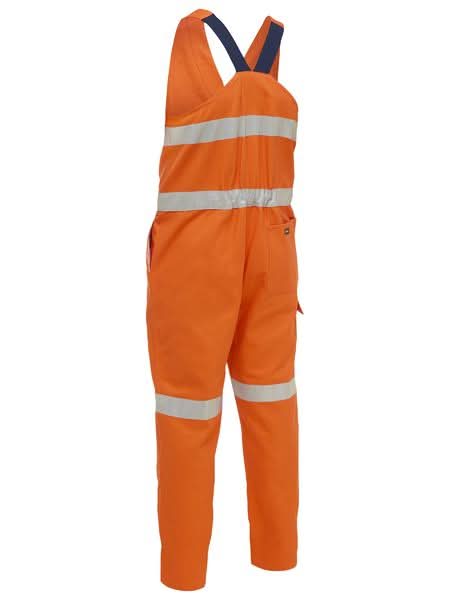
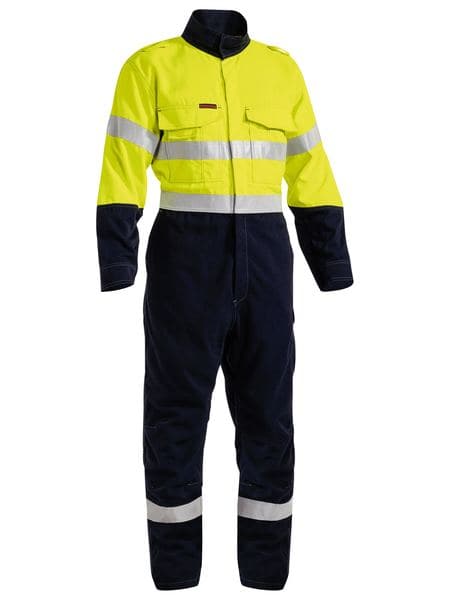
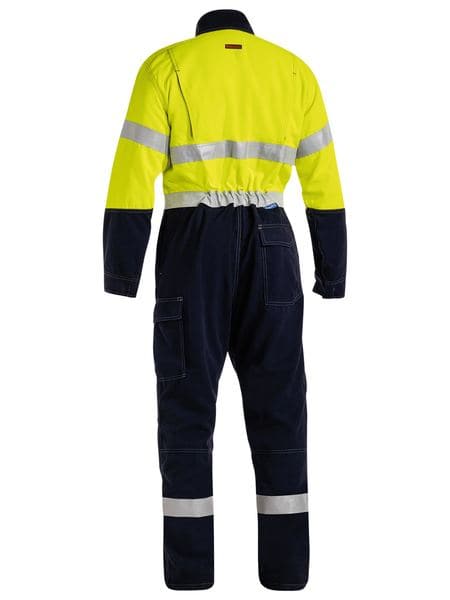
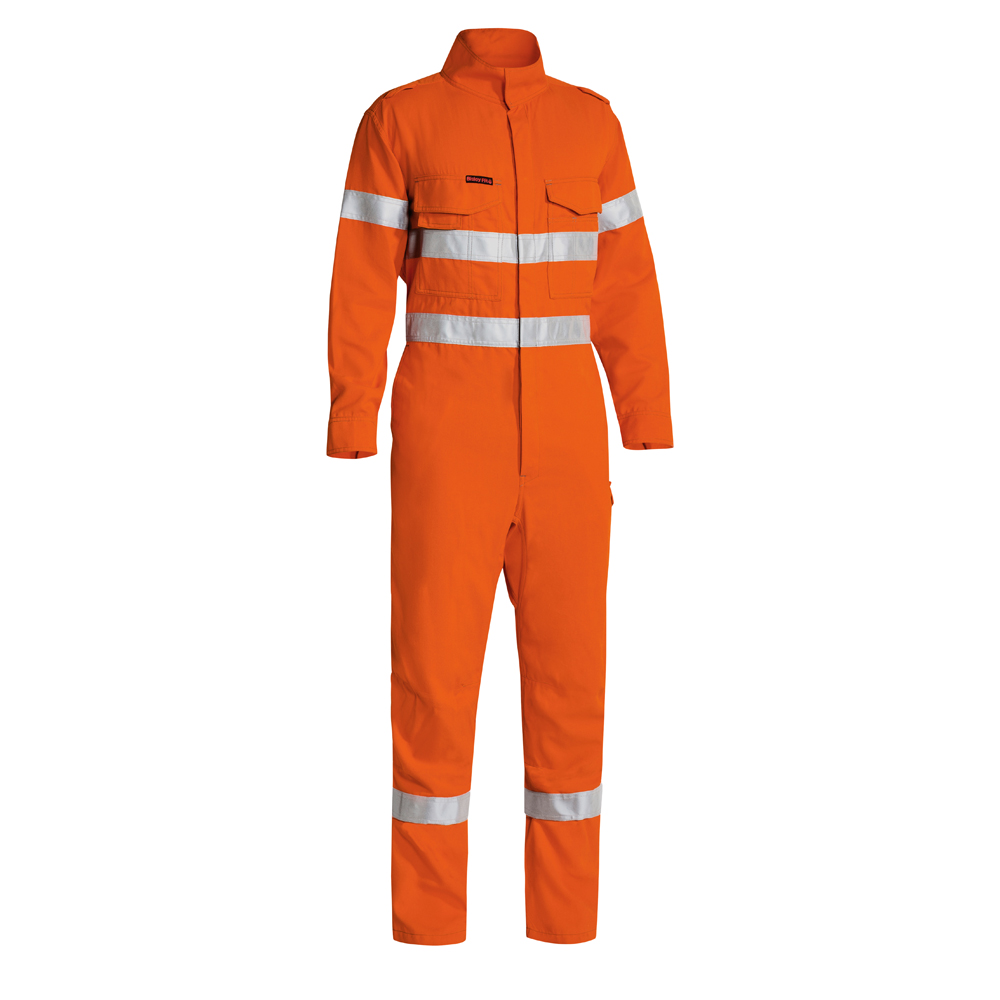
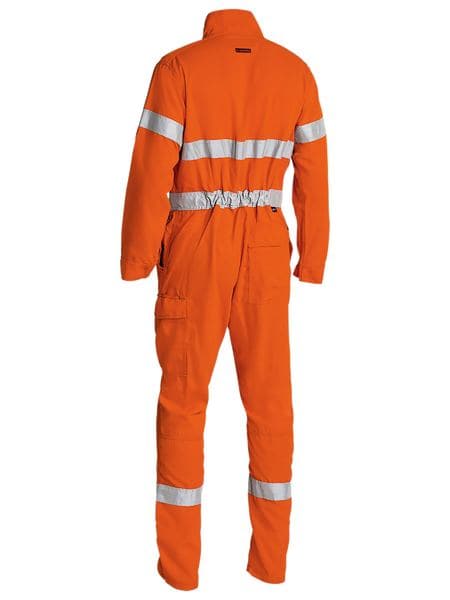
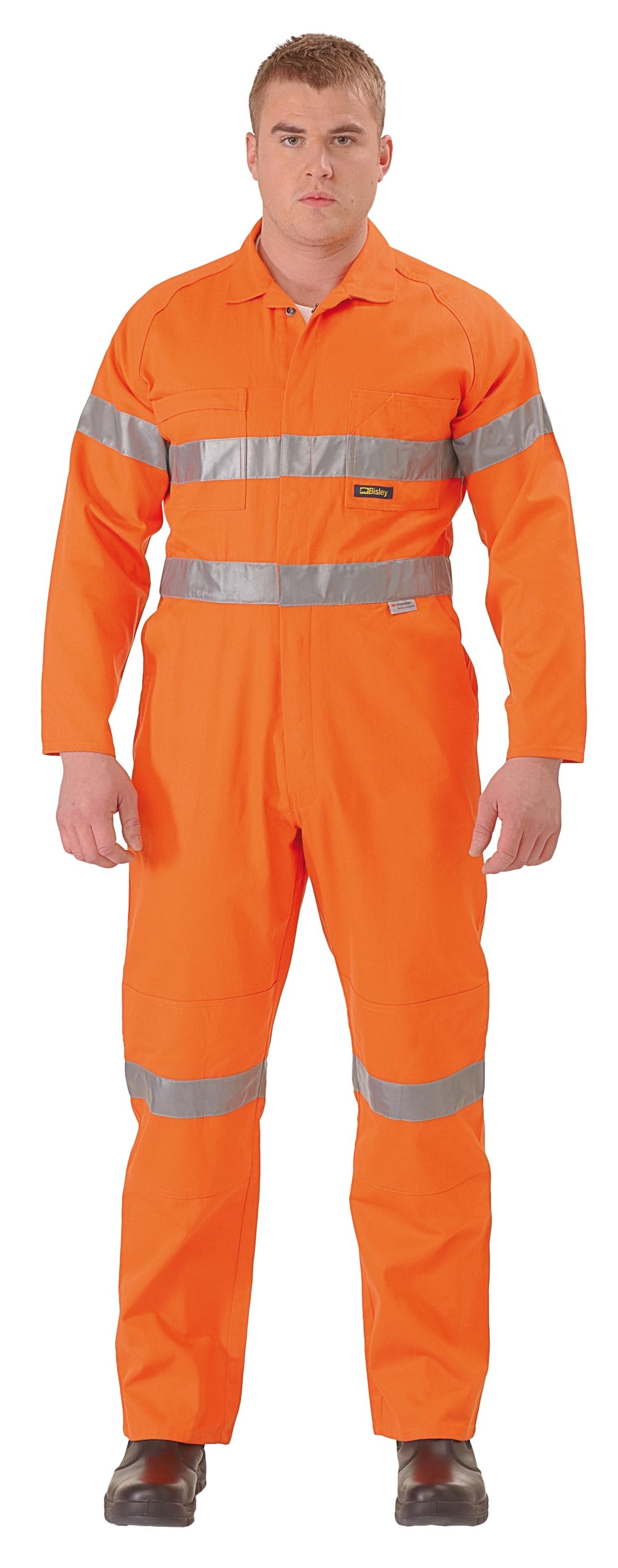
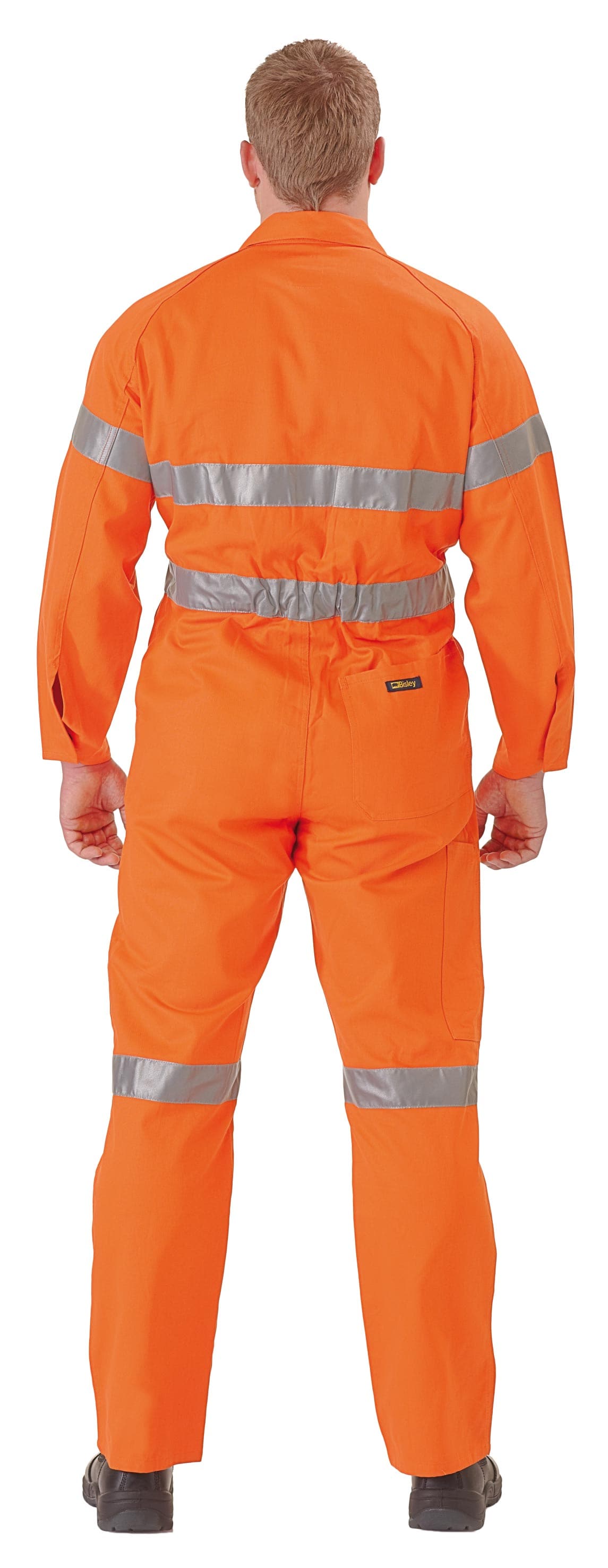
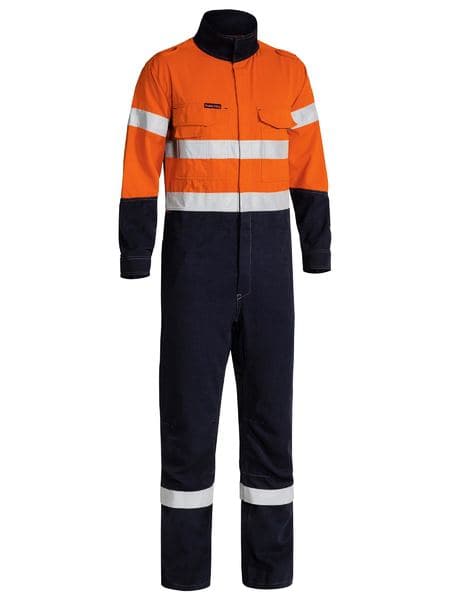
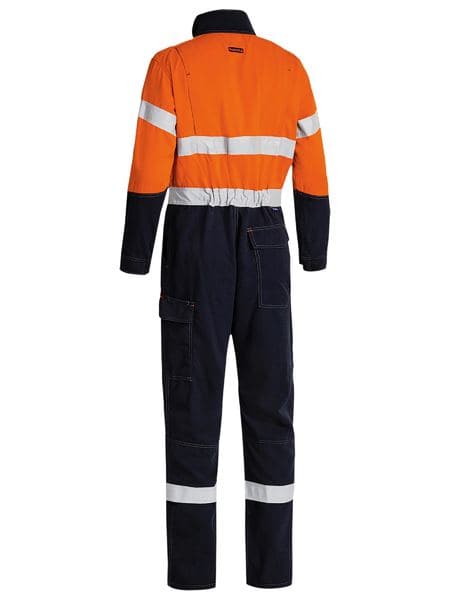
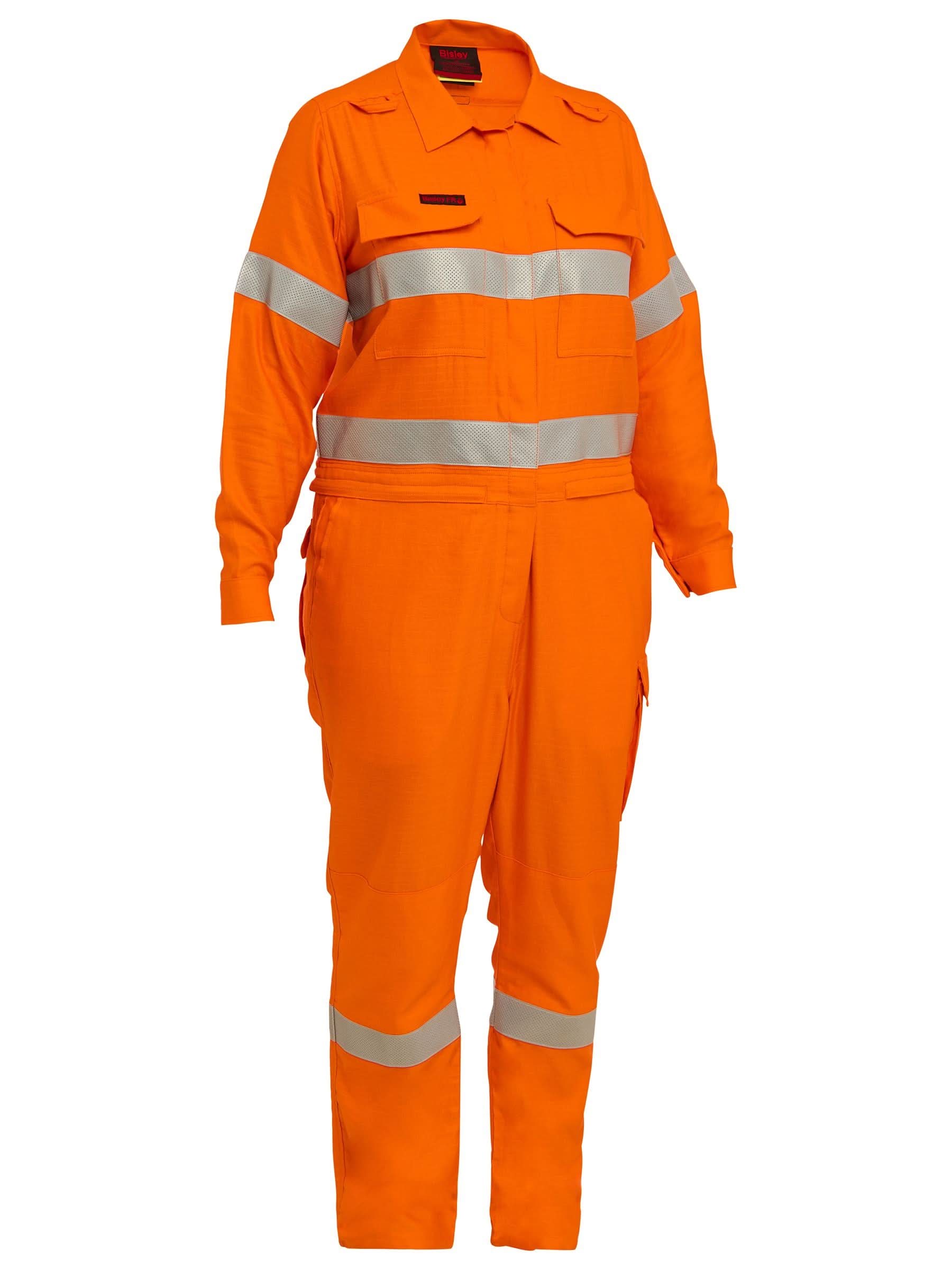
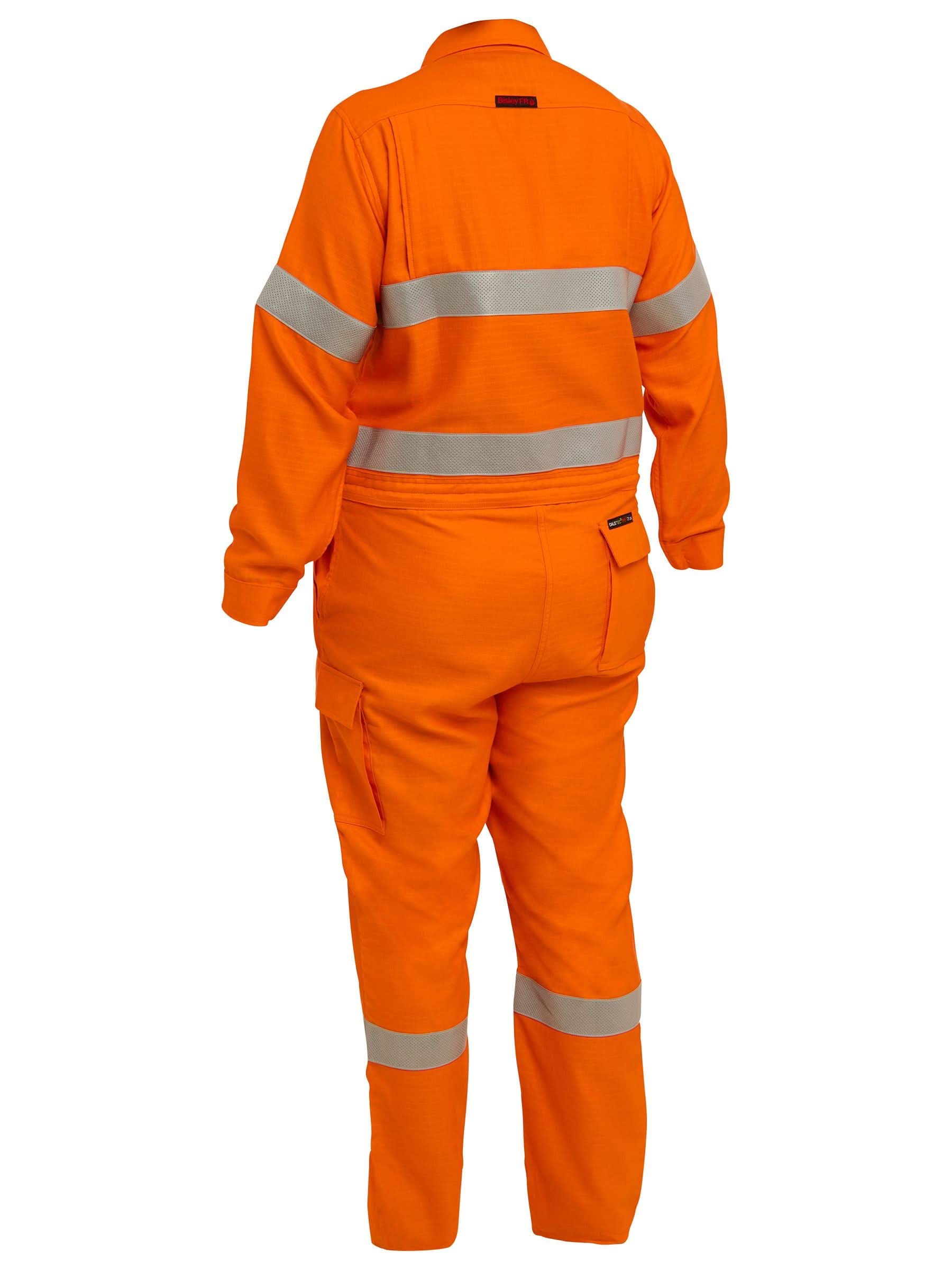
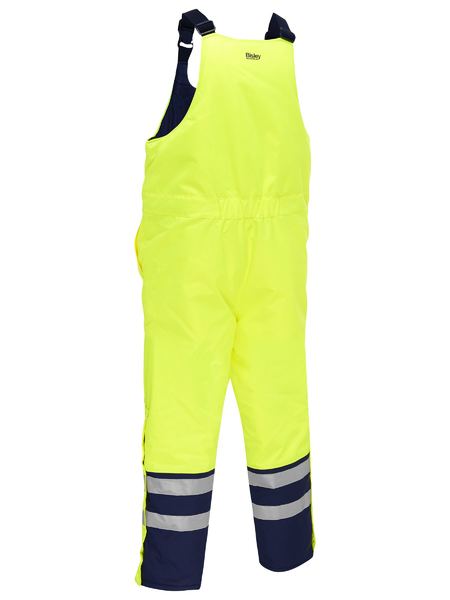
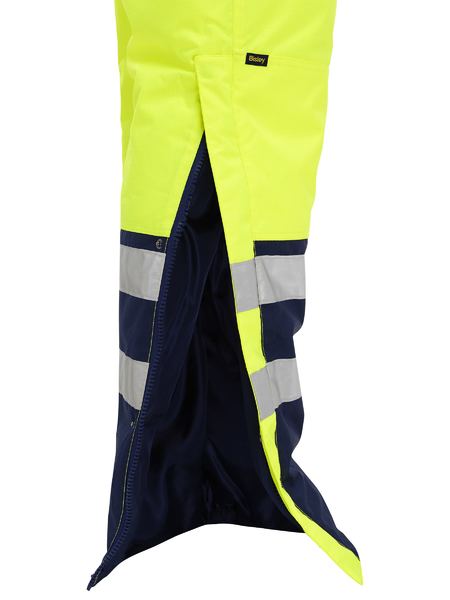
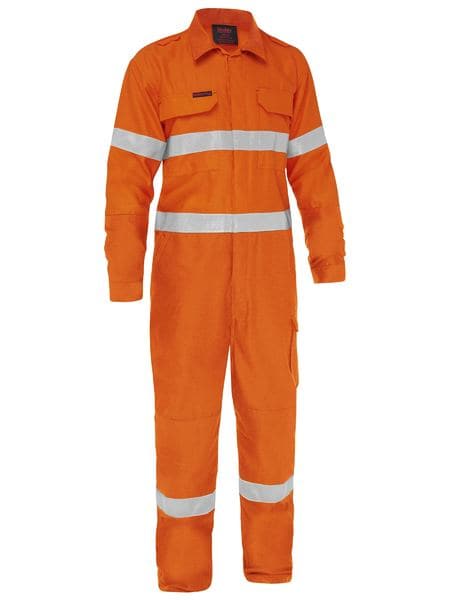
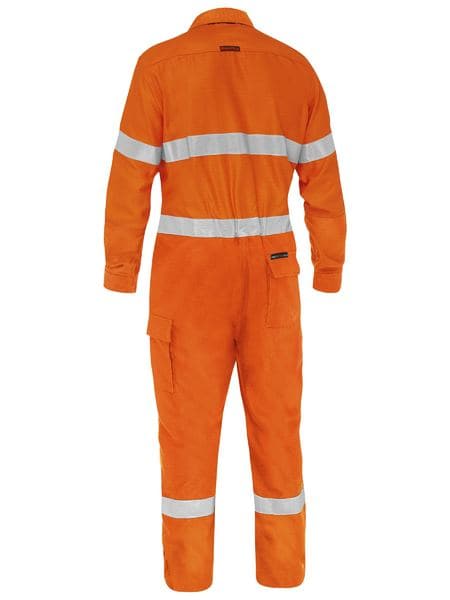
Most of this range is hi vis, and most of that is taped for day and night. That is worth saying plainly, because overalls have a reputation as the low-risk casual option and this page is not mostly that. Work overalls and coveralls get worn where the hazard is to your clothes and your skin — dirt, sparks, chemicals, cold — or where a site would rather the visibility requirement was met by one garment than by a shirt and trousers that have to match each other.
Several things on this page are their own garment rather than a variation on the next one. Action back overalls are cut with elasticated shoulders so you can reach overhead without the whole garment lifting with you. The two dust coats are worn over your own clothes to keep them clean rather than to protect you from anything — one plain white, one hi vis. Freezer coveralls are built for sustained cold and are a different proposition from a lined jacket. There is a rail coverall carrying the tape layout rail work asks for. Worth reading which one a listing actually is before comparing two that look alike in a thumbnail.
Women's coveralls here are a distinct cut, not a shorter men's one, and they are named that way in the product title. That matters more in a one-piece than in anything else you wear: a men's coverall taken down to a woman's chest measurement is long in the body and long in the sleeve, and length you cannot take up is length that catches on things. The women's styles are sized on the women's scale while the men's are sized by waist, so the numbers do not carry across — check each against the size charts rather than assuming your usual size translates.
Some of the range is flame resistant and most of it is not, and the two are hard to tell apart in a photograph. If your site names a standard, match the garment to that standard rather than to what the last one looked like. We cannot tell you what your site requires; your induction can. Men's coveralls and overalls are collected separately, and the women's flame resistant range covers the FR side beyond one-piece garments.
What is the difference between overalls and coveralls?
Coveralls are a full one-piece garment with sleeves, covering you from ankle to neck. Bib and brace overalls have a chest panel and shoulder straps worn over your own shirt.
Coveralls give more coverage and keep everything underneath clean, which is why they suit mechanical, spray and dirty process work. Bib and brace runs cooler and is quicker to get in and out of.
How should a coverall fit?
Size a coverall by chest and inside leg rather than by your usual shirt size — it has to fit over whatever you are wearing underneath, and it has to let you crouch and reach without pulling at the shoulders.
If you will be wearing it over winter layers, allow for that. A coverall that fits perfectly over a t-shirt will be restrictive over a fleece.
Can I get flame resistant coveralls?
Yes, and for hot work they are the right choice over ordinary drill. Flame resistant coveralls are made from inherently FR fabrics rather than treated ones, so the protection does not wash out over the garment's life.
As with any FR garment, the rating has to be matched to the incident energy of the task, which is assessed on site rather than chosen from a product page.
Recently viewed
Free Shipping
Order over $200 and the order ships free, Australia wide.
Established 1990
We know how to take care of our customers.
Top-Notch Support
Need a hand or have a question? Don't hesitate to reach out.
Save Upto 15%
The more you add, the more you save. Buy in bulk and take 15% off.
Opens in a new window.
Gifting has never been easier
Perfect if you're short on time or are unable to deliver your gift yourself. Enter your message and select when to send it.